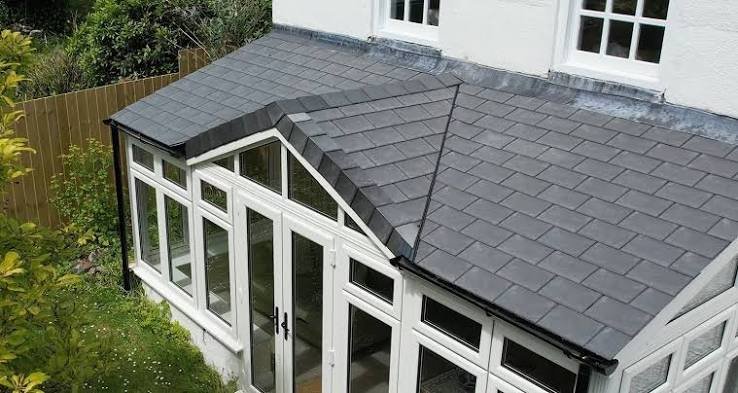
Quick answer: A wrapover conservatory roof is a new roof built over the top of the existing structure instead of replacing it. It is quick and often cheaper at the start, but it can leave weight, insulation, waterproofing and paperwork questions unanswered. A fully engineered replacement is designed around the existing frames and base, with calculations, defined insulation and a route to building regulations approval. If you are offered a wrapover, check each claim before you sign.
You have asked a few installers about a new roof for your conservatory, and one of them has suggested a wrapover conservatory roof. The pitch is appealing. It is quicker, it costs less, there is less mess and the old roof stays where it is. Many homeowners take the offer without a second thought.
Others stop and wonder what they are really buying. This guide is for them. It follows the way a wrapover is normally sold, takes each part of the pitch in turn and shows what to check. It does not claim every wrapover fails. It explains why the method carries more risk than a properly engineered replacement, and what you can do to protect yourself either way.
What a wrapover conservatory roof actually is
In a wrapover, the existing roof is left in place and a new roof is built above and around it. The old glazing or panels stay, hidden underneath, and the new roof is supported by the old frames and, in some designs, by added timber or steel.
A full replacement is different. The old roof is removed, the frames and dwarf wall are assessed, and a new roof is designed to be carried by them, with the weight, insulation and waterproofing all considered together.
The term matters for another reason. A wrapover is a method of fitting a roof. It says nothing on its own about the quality of the roof, which is why the specification, not the name, is what you should look at.
Why wrapovers are offered
There are straightforward commercial reasons.
- Speed. Less is removed, so fitting can take less time.
- Lower price. Less labour and fewer materials can mean a lower quote.
- Less disruption. The old roof acts as a temporary shelter while work continues.
- Fewer surprises. Leaving the old roof alone avoids uncovering problems in the frame, which is useful for the installer and potentially unhelpful for you.
That last point is worth thinking about. Problems in the frames do not disappear because they are covered. They stay hidden until they cause trouble.
The pitch, claim by claim
This section takes the statements you are most likely to hear and suggests what to check.
“There’s no need to remove the old roof”
True, with a wrapover. The question is what the old roof is sitting on and whether it can carry the extra load. Old frames, especially on older conservatories, may have been designed for lightweight glazing. Ask what has been done to assess them, and ask for that in writing.
“It can be done in a day or two”
Possibly. Speed is not a fault in itself, but a rushed job leaves less time for careful detailing at junctions and for the survey that should come first. Ask whether the survey happens in person, what it covers and how long the fitting is expected to take on your particular conservatory.
“It’s much cheaper than a full replacement”
It often is at the start. The question is what has been left out to make it cheaper. Compare the specification: insulation, structural design, drainage, building control and guarantee. If the low price is the result of fewer layers and less engineering, the saving may be short-lived.
“You don’t need building regulations for it”
Treat this with care. Replacing a glazed roof with a solid one normally brings building regulations into play in England and Wales, with equivalent routes in Scotland and Northern Ireland. Whether a particular wrapover needs approval depends on the details. A good installer explains how it is handled and who collects the certificate. One who says “no paperwork needed” without explaining why deserves more questions.
“It’s lighter than a normal tiled roof”
It may well be lighter. Lighter does not mean weightless. The frames still carry it, and any wind or snow load still passes through them. Ask for the load calculation, not a statement.
“It comes with a guarantee”
Every installer says so. What matters is what the guarantee covers, for how long, and who pays if the installer stops trading. An insurance-backed guarantee stays valid even if the company does not. A guarantee backed by nothing but the installer’s word is only as good as their business.
What a wrapover has to get right
Whichever way the roof is fitted, the same problems have to be solved. A poorly engineered wrapover can leave one or more of them unresolved.
Weight and structure
A solid roof is heavier than a glazed one. The load travels down the frames and into the dwarf wall, so each element must be able to take it. If it cannot, the possible results include sagging panels, distorted frames, cracks and leaks. These are risks of poor engineering, not certainties, and they are the reason to ask to see calculations.
Insulation and thermal bridging
A roof that does not insulate properly defeats the purpose. Ask for the U-value, which is the measure of how much heat passes through the roof, and ask for it in writing. Also ask how the edges are dealt with. Metal frames can conduct heat out of the room, a problem called thermal bridging. A roof can look thick and still lose heat at its edges.
Waterproofing and joints
Most leaks begin at junctions, not in the middle of a roof. With a wrapover the joints between old and new parts are a particular risk: where the new roof meets the existing frames, the gutters, the house wall and the flashing. Ask how each of these is made watertight. “It’s sealed” is not an answer.
Condensation and ventilation
Condensation forms when warm, damp air meets a cold surface. Inside a roof build-up it can lead to damp, mould and timber damage if there is no proper vapour control layer, no airtight layer or no ventilation. You cannot see this from the garden, which is why the specification matters.
What an engineered alternative looks like
A fully engineered replacement addresses those questions from the start. It typically involves a survey of the structure, a roof designed for the load, a defined insulation build-up, airtight and vapour control layers, factory-prepared components for accurate fitting and a documented route to approval. Systems such as the Guardian Warm Roof are designed on those principles, and Guardian Warm Roofs come with an insurance-backed guarantee when installed in line with the official installation guide. GuardianRoofsUK is one example of an installer that works this way. Whoever you choose, the test is the same: can they show you the evidence?
Common wrapover problems
Where engineering and compliance are not prioritised, owners report or can expect issues such as:
- Leaks around junctions, sometimes within the first winter
- Sagging or distortion of the roof or frames
- Cold spots and persistent condensation
- Rattling or lifting in strong winds
- Difficulty producing a building control certificate when selling
- A need to replace the roof earlier than expected
None of these is inevitable, and a wrapover that has been designed, calculated and signed off is a different thing from one that has not. The difference is the quality of the engineering and the paperwork.
If you want to read an installer’s own explanation of the method and its risks, there is a wrapover conservatory roof guide on the Guardian Roofs UK site. Use it alongside your own questions, and keep in mind that any installer has an interest in their own product.
Are wrapover conservatory roofs any good?
This is one of the most searched questions, and the fairest answer is that the method carries more risk than a properly engineered replacement. A wrapover does not remove the old roof, so any hidden problem in the frames or base stays in place, and the new roof inherits it. The new roof also has to sit on top of the old structure and still meet insulation, weight and waterproofing requirements, which is a harder design problem than starting with a clean, assessed structure.
That does not make every wrapover bad. It means that the buyer carries more of the burden of checking.
Wrapover vs full conservatory roof replacement
Comparing the two on the points that matter helps.
- Assessment: A full replacement exposes the frames and wall, so they can be inspected and repaired. A wrapover may leave them unseen.
- Design: A replacement is designed around the assessed structure. A wrapover is designed around whatever is already there.
- Insulation: A replacement can use a defined build-up and detail the edges. A wrapover can be limited by the space and structure it sits on.
- Paperwork: A system built with a documented route to building regulations approval is easier to certify.
- Cost: A wrapover is often cheaper at the start. A replacement may cost more up front and avoid remedial work later.
- Risk: A wrapover places more responsibility on the buyer to verify the details.
Wrapover vs tiled conservatory roof
People sometimes compare these as if they were opposites. They are not. A tiled roof describes the finish and the structure of the roof. A wrapover describes how it is fitted. You can have a tiled roof fitted as a wrapover or as an engineered replacement. The more useful comparison is between an engineered tiled system with calculations, defined insulation and approval, and a tile-effect covering laid over what is already there.
Wrapover roof building regulations
Building regulations are one of the main areas where wrapover buyers get caught out. In England and Wales, replacing a glazed conservatory roof with a solid one normally needs building control approval. In Scotland, a building warrant is obtained through the local council, and Northern Ireland has its own system. Check with your local building control team how it applies to your project.
Ask your installer to confirm in writing who applies, who pays and who collects the final certificate. A missing certificate rarely causes a problem on the day. It can surface years later, when a buyer’s solicitor asks for it, and by then the installer may no longer be around.
Planning permission is a separate question. It is usually not needed to replace an existing roof, though listed buildings and conservation areas have extra rules.
Wrapover roof guarantee: what to look for
A guarantee is only useful if it can be claimed. Check:
- What exactly is covered: leaks, structure, finishes, glazing
- How long it lasts
- Who underwrites it, and whether it continues if the installer stops trading
- What conditions apply, such as installation to a manufacturer’s guide
- Whether it transfers to a new owner if you sell
Get it in writing before you pay a deposit.
Questions to ask before agreeing to a wrapover
Take these to every installer and keep their answers.
- Has a surveyor looked at my frames and dwarf wall in person?
- Are there structural calculations for the new roof?
- What is the U-value of the finished roof, and how are the edges insulated?
- How are vapour control and ventilation handled?
- How is each junction made watertight?
- How is building regulations approval handled, and who collects the certificate?
- Is the guarantee insurance-backed, and what does it cover?
- Can I see completed examples and speak to a recent customer?
Clear, confident answers are a good sign. Vague ones are not.
Warning signs
None of these proves a problem on its own. Several together are a reason to slow down.
- A fixed price given without anyone examining your frames
- No mention of calculations, building control or certificates
- Reluctance to put the specification or insulation value in writing
- Pressure to sign today for a discount
- A large upfront payment
- A guarantee with nothing behind it
- Vague answers about junctions, insulation and ventilation
If you already have a wrapover roof
If your wrapover is working well, there is no need to worry. If you notice leaks, sagging, constant condensation or temperature problems, have it assessed before damage spreads. Find your paperwork, including any guarantee and building control certificate, and keep it with your house documents. A professional second opinion costs little compared with the cost of the roof.
If you are holding a quote
- Read the specification. Does it describe a new structure or a covering over the existing roof?
- Note what the quote leaves out, such as calculations, insulation value and certification.
- Send the questions above to the installer and keep the replies.
- Ask an installer of an engineered system for a second opinion and comparison.
- Compare the whole package: roof, guarantee, paperwork and aftercare, not just the price.
Frequently asked questions
What is a wrapover conservatory roof?
It is a new roof fitted over the existing conservatory structure instead of replacing it. The old roof stays in place beneath the new one, which is why the frames and base need to be properly assessed.
Are wrapover conservatory roofs any good?
They can be quick and cheaper to fit, but the method carries more risk than an engineered replacement because hidden problems stay in place and the new roof must still meet weight, insulation and waterproofing needs. Ask to see calculations, the insulation value and the guarantee before agreeing.
What are the common wrapover roof problems?
Where the work is poorly engineered, owners may see leaks at junctions, sagging, cold spots, condensation and difficulty proving compliance when selling. These are risks, not certainties.
Does a wrapover conservatory roof need building regulations approval?
Replacing a glazed roof with a solid one normally does in England and Wales, with equivalent routes in Scotland and Northern Ireland. Whether it applies to your project depends on the details, so ask your installer for written confirmation and check with your local building control.
Is a wrapover cheaper than a full replacement?
Often at the start. Compare what is included, especially insulation, structure, paperwork and guarantee, because savings made now can be lost to repairs later.
Can you fit a new roof over an old conservatory roof?
Some systems are designed to be, but the frames and base must be able to carry the extra load, and the finished roof must still meet insulation and building requirements. A survey from a qualified installer should answer both before any work starts.
What is the difference between a wrapover and a tiled conservatory roof?
A tiled roof describes the finish and structure of the roof, while a wrapover describes how it is fitted. An engineered tiled system with calculations and approval is a different proposition from tile-effect covering laid over the old roof.
How can I check a wrapover guarantee is worth having?
Ask who underwrites it, what it covers, how long it lasts and whether it continues if the installer stops trading. An insurance-backed guarantee installed to the manufacturer’s guide is a stronger position than a promise from the installer alone.